

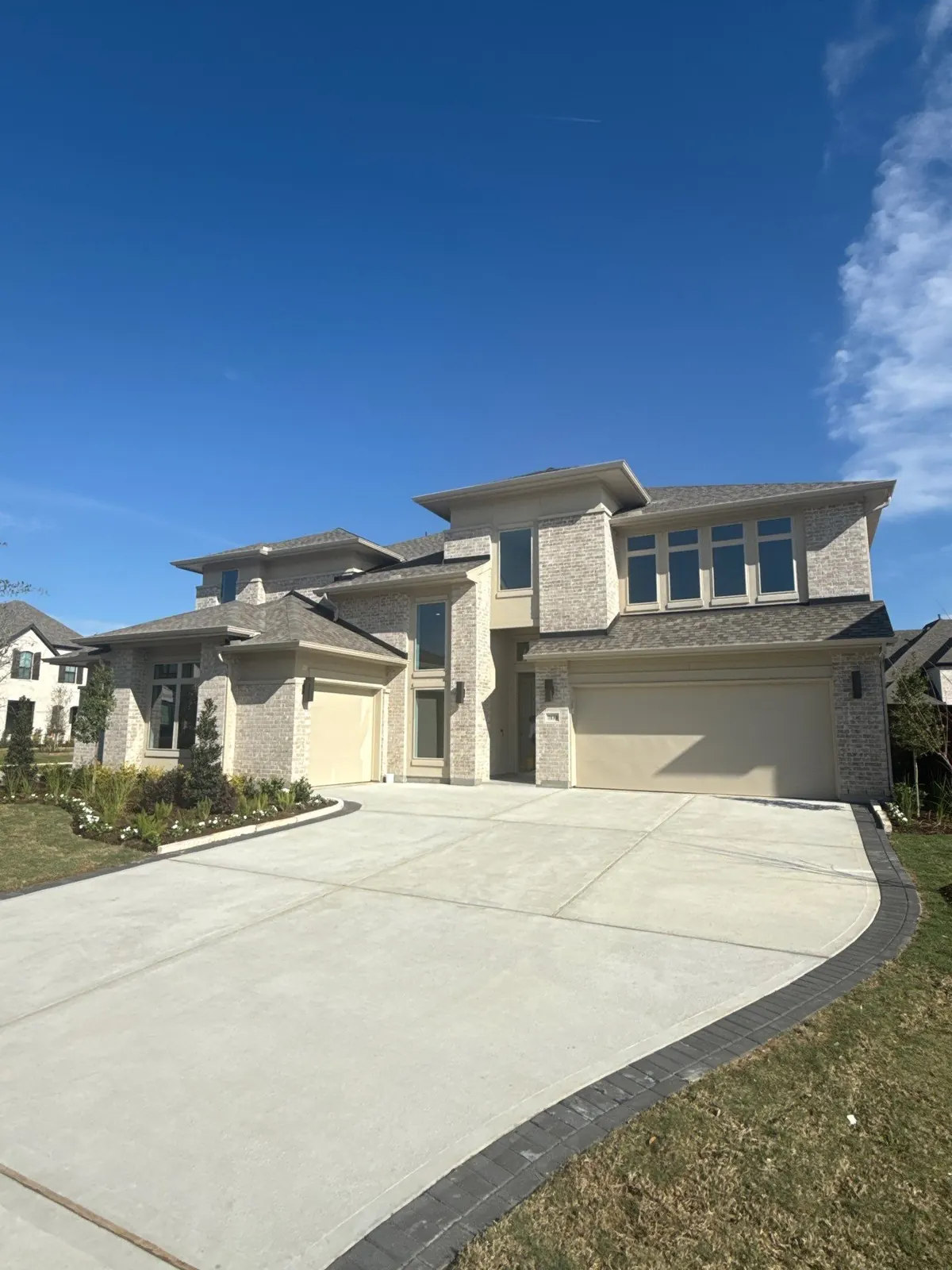
Concrete slabs and driveways in Katy & Houston start below the surface
Most of the work on concrete slabs and driveways in Katy & Houston happens before a truck arrives. The ground is cleared, the base is built up and compacted, forms are set to the right height and slope, and reinforcement is placed so it ends up inside the concrete rather than lying on the dirt. The pour and finish take a fraction of the time, but they can only be as good as that preparation.
Down South Roofing & Construction pours slabs for shops and metal buildings and handles driveways, walkways and patios from its base in Katy, working across Houston, Cypress, Fulshear, Richmond and nearby communities. Every project starts with two questions: what will the concrete carry, and where will the water go.
Why concrete cracks on Gulf Coast clay soil
Much of the Houston area sits on expansive clay. It swells when it soaks up water and shrinks and cracks when it dries out, so a long dry summer followed by a week of tropical rain can move the ground under a driveway or patio. Concrete is strong in compression but weak when the ground beneath it shifts unevenly, which is why so many older driveways in Katy and Sugar Land show cracks and sunken panels.
Some fine cracking is normal in any concrete. The goal is to control where it happens and keep the slab from moving. Good base material, proper compaction, reinforcement, well-placed control joints and steady moisture around the edges all help. So does keeping downspouts and sprinklers from soaking one side of the slab while the other side stays dry.
Shop slab foundations for metal buildings and garages
A shop slab carries far more than a patio. Vehicles, lifts, workbenches, compressors and stored equipment put concentrated loads on the floor, and a steel building needs anchor bolts set precisely where the frame columns will land. The slab is usually thickened at the edges and under columns, and the pad is raised above the surrounding grade so rain drains away.
Because Down South also builds metal buildings and barndominiums, the slab can be planned with the building drawings in hand. Tell the team about floor drains, a lift, a trench drain at the doors, or any plumbing and electrical that needs to come up through the floor, because all of it has to be in place before the pour.
Driveway replacement: when to replace instead of patch
Hairline cracks that stay flat are mostly cosmetic. Replacement makes more sense when panels have sunk or heaved, when cracks are wide enough to catch a tire or a toe, when water pools against the garage or the house, or when large sections are breaking apart. Patching concrete that is still moving rarely lasts, because the cause is underneath.
A driveway replacement usually means breaking out and hauling away the old concrete, correcting the base and the slope, and pouring new panels with joints laid out to control cracking. It is also a good time to widen the driveway, add a walkway, or fix where the driveway meets the street, which may involve city or HOA rules.
Patio slabs and walkways that drain away from the house
A patio slab should slope gently away from the house so rain runs into the yard instead of toward the foundation or under a door. In Houston’s heavy downpours, even a small backward slope can push water against the slab edge or into a garage. Where the yard is flat, the plan may need a drain or a swale to carry water to the street.
Tie-ins matter too. New patios and walks are usually separated from the house foundation with an expansion joint so the two can move independently. Think about where a future patio cover, grill area or outdoor kitchen might go, so the slab is sized and thick enough for them now.
Rebar, thickness and joints: what to ask about
Ask what thickness is planned for each area and why. A walkway, a patio, a car driveway and a shop floor do different jobs, and the plan should match the load. Ask what reinforcement will be used, whether rebar or wire mesh, how it will be supported so it sits in the middle of the slab, and how far apart control joints will be cut.
A clear estimate also states the base material and compaction, whether old concrete removal and haul-off are included, the finish (broom, smooth or decorative), and how the site will be left. Down South provides a written scope and estimate before work starts so these details are agreed in advance.
Pouring and curing concrete in Texas heat
Concrete hardens through a chemical reaction that needs water. In a Houston summer, sun, wind and high temperatures can pull moisture out of the surface too fast, which leads to surface cracking and a weaker top layer. Crews often start early in the morning, keep materials and the base from getting too hot, and finish quickly.
After the pour, curing keeps the slab moist or sealed so it gains strength evenly. You can usually walk on new concrete within a day or two, but cars and heavy loads should wait longer. Rain in the forecast also shapes pour day, because a heavy shower on fresh concrete can damage the finish.
What happens on a concrete job, from layout to cleanup
A typical driveway or patio job starts with marking the area and checking for buried lines, which in Texas means calling 811 before digging. Old concrete is broken out and hauled away, then the base is graded, filled and compacted. Forms and reinforcement go in next, and the crew checks slopes and heights before the concrete truck is scheduled.
Pour day is followed by finishing, cutting control joints and curing. Once the concrete has set, the forms come off, edges are backfilled with soil, and the site is cleaned up. Plan to keep cars, pets and sprinklers off the new surface until the team says it is ready.