

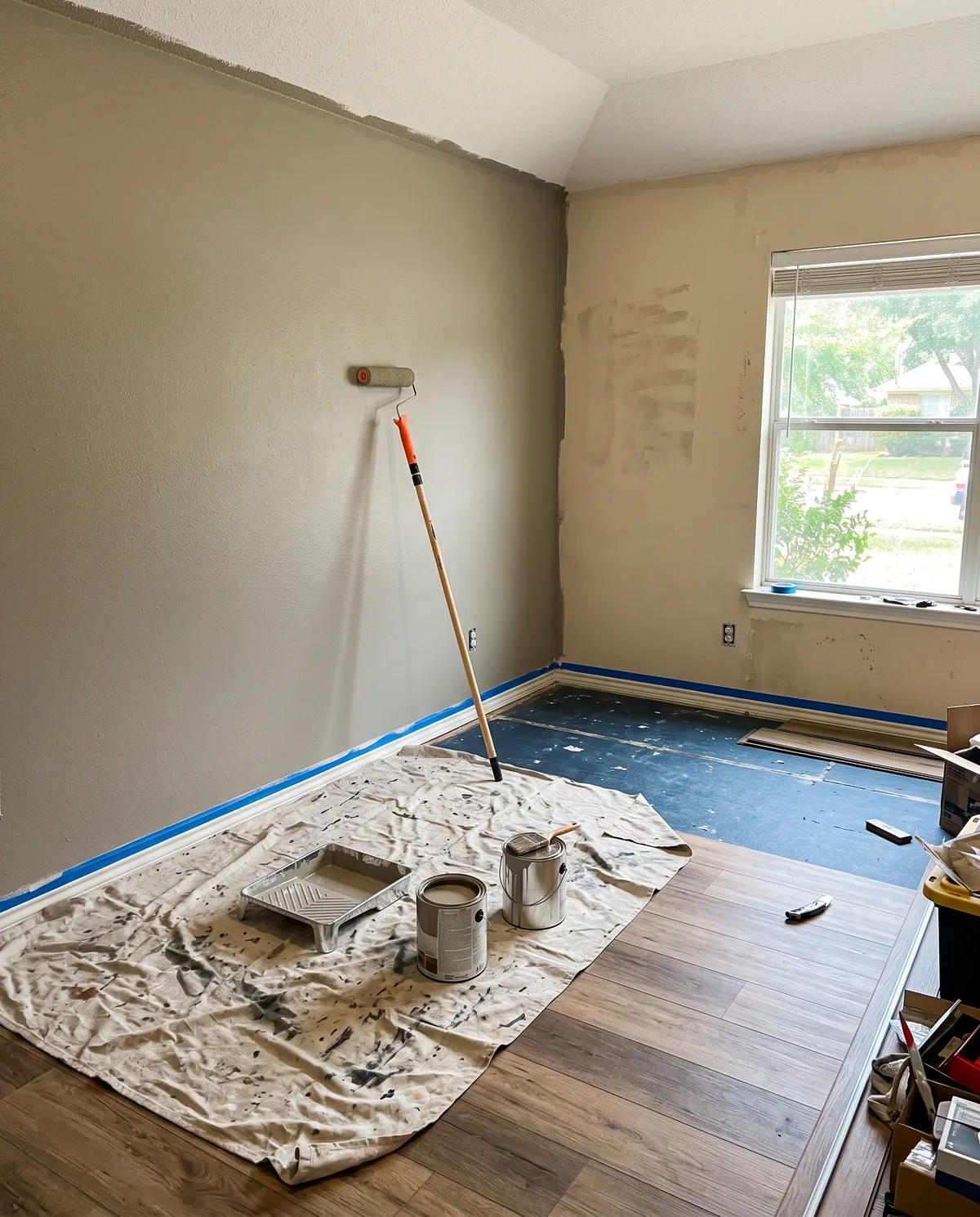
Flooring installation and interior painting in Katy & Houston
Flooring installation and interior painting are two of the most effective ways to change how a Katy or Houston home feels without moving a single wall. They also depend heavily on the work nobody notices afterward: a flat subfloor, patched drywall, clean caulk lines and the right product for the room. Down South handles both, on their own or as part of a larger remodel, so the order of work and the finishes are planned together.
A common starting point is a home in Cypress or Fulshear with carpet in the living areas, builder-grade paint on every wall and tile that stops at odd places. Replacing those in a coordinated way makes the house read as one design instead of a series of patches.
Is luxury vinyl plank a good choice in a humid climate?
Luxury vinyl plank, often called LVP, is popular across the Houston area because most products handle moisture far better than laminate or solid wood. Spills on the surface won’t swell the planks, which makes LVP practical for kitchens, laundry rooms and homes with pets. It’s also comfortable underfoot and quieter than tile.
Water-resistant on top doesn’t mean the slab underneath is dry. Concrete slabs on the Gulf Coast can carry moisture, so installers check the slab and use the underlayment or vapor barrier the product calls for. LVP also needs a flat surface. High spots and dips telegraph through thin planks and can separate the locking joints over time, which is why floor prep belongs in the estimate.
Tile and wood-look flooring options
Porcelain tile is very durable and stays cool, which many Texas homeowners appreciate in summer. Wood-look porcelain planks give the warmth of hardwood with the water resistance of tile, and they work well in entries, kitchens and bathrooms. Long planks need a flat floor and a careful layout to avoid uneven edges between tiles.
Engineered wood is another option for living areas where you want real wood, but it is more sensitive to moisture than LVP or tile. The team can talk through how each material fits the rooms, your pets and how the new floor meets carpet, tile or existing wood next to it.
Whatever the material, a few installation details separate a floor that lasts from one that fails early. Floating floors need an expansion gap at the walls, hidden by baseboard or quarter round. Many products should sit in the house for a period before installation so they adjust to indoor temperature and humidity. Tile needs full mortar coverage and properly spaced grout joints. Ask how each of these is handled.
What affects the cost of new flooring?
The material is only part of it. Square footage, the number of rooms and transitions, stairs, removal of the existing floor and how much leveling the slab needs all affect the cost. Tile removal takes more time than pulling carpet. Baseboards may be reused or replaced, and toilets, appliances and furniture have to be moved and reset.
Continuous flooring through several rooms usually looks better and avoids extra transition strips, but it means doing more of the house at once. A written estimate should spell out removal, prep, transitions, trim and furniture moving so nothing is assumed.
Interior painting: prep work makes the finish
Most of a good paint job happens before the first coat. Nail pops, settlement cracks and dings get filled and sanded, glossy trim is cleaned and scuffed so paint sticks, and gaps at trim and corners are caulked. Furniture and floors are covered, and outlet plates come off. Skipping these steps is why some paint jobs look tired within a year.
Sheen matters as much as color. Flat or matte hides wall imperfections, eggshell or satin wipes clean in hallways and kids’ rooms, and semi-gloss holds up on trim and doors. Bathrooms and laundry rooms benefit from a paint made for humidity.
Exterior painting and cabinet painting
Exterior paint in Katy and Houston has to handle strong sun, heavy rain and constant humidity. Soft or rotted wood trim should be replaced before painting, because paint won’t hold on damaged wood. Fiber cement siding, trim boards and doors all need cleaning, caulking and the right primer. Timing matters too: paint needs dry weather and moderate temperatures to cure properly.
Cabinet painting is a way to update a kitchen or bathroom while keeping solid cabinet boxes. Doors and drawer fronts are removed, degreased, sanded and primed, then finished with a durable enamel. It takes patience, since each coat needs drying time, and it works only when the cabinets themselves are in good condition.
Choosing colors and finishes that work together
Floors and paint are big surfaces, so small samples can mislead. Bring flooring samples home and look at them next to your cabinets, trim and furniture in both morning and evening light. Paint large swatches on two or three walls before committing. Houston’s bright sun through west-facing windows changes how a color reads, and a gray that looks neutral in the store can turn cool or blue on the wall.
If you plan to sell in the next few years, lighter neutral walls and a single continuous floor through the main living areas tend to appeal to more buyers. If you’re staying, choose what suits the way you live.
Paint first or floors first?
It depends on the job. Painting walls and ceilings before new flooring goes in avoids drips on the new floor. Baseboards are often installed or reset after flooring and then caulked and painted last. The team recommends a sequence for your project and explains it in the scope.
Plan where furniture will go and which rooms you’ll live in during the work. Doing the house in phases is possible, and a real person confirms each visit so you know what to expect.