

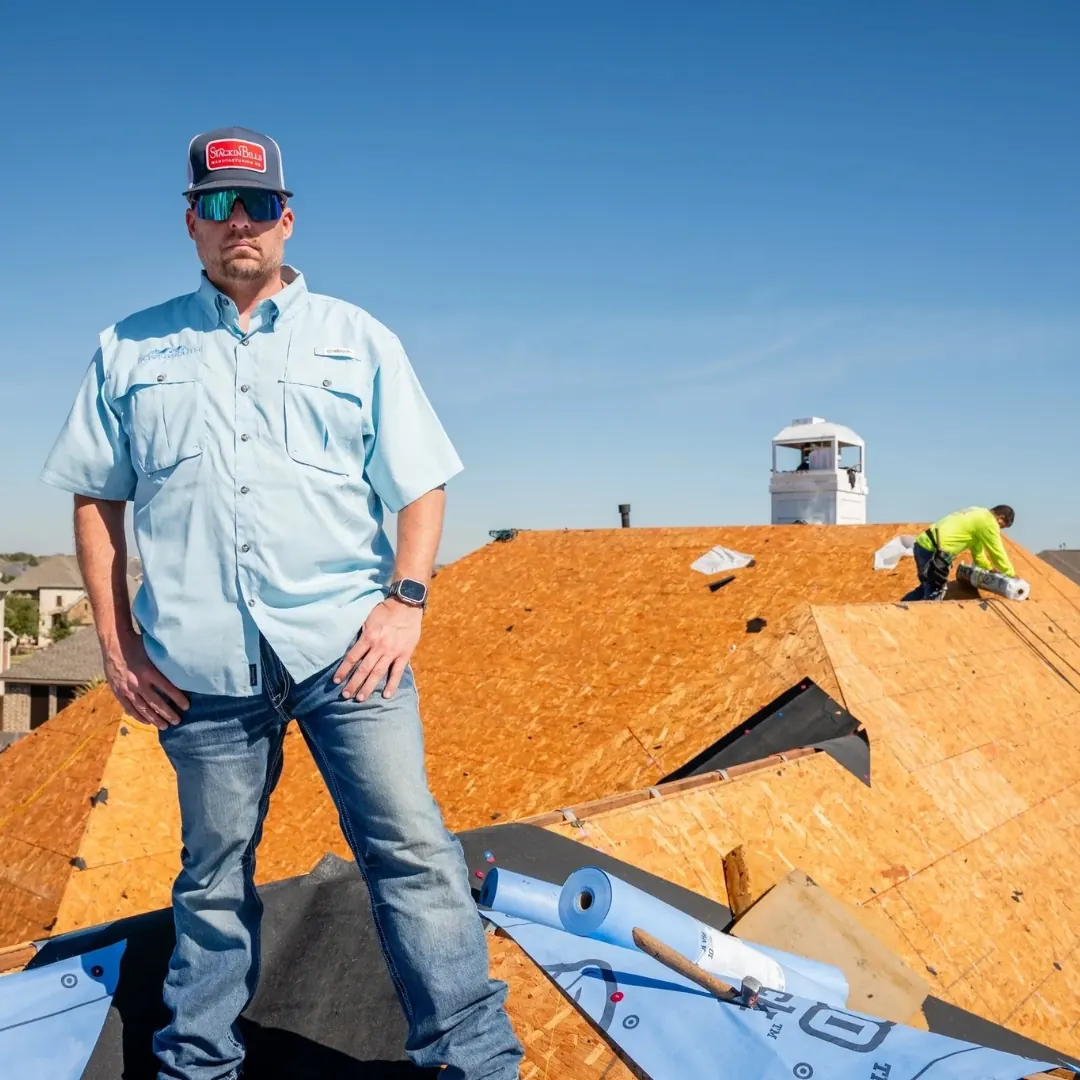
Is it time for a roof replacement in Katy or Houston?
A roof replacement in Katy and Houston, TX usually starts with a pattern rather than a single event. Leaks show up in new places each season. Shingles curl at the edges or cup in the middle. Gutters fill with granules after every rain, and the south and west slopes look patchy and dark. Inside, you may notice sagging between rafters or daylight around a vent when you look in the attic.
One of these signs alone does not always mean a new roof. Several of them together, or a roof that has been patched again and again, is when replacement deserves a serious look. A free inspection from Down South Roofing gives you a clear read on the whole roof before you commit to anything.
Building an addition, a new home or a metal building instead? New roof installation follows the same principles of decking, underlayment, flashing and ventilation, but it is planned around the framing and the rest of the construction schedule. Share your drawings early so the roof proposal fits the build.
How long does a roof last in Texas heat?
Houston-area roofs work harder than roofs in milder climates. Summer sun bakes the surface, attic temperatures climb well above the outdoor air, and humid nights add moisture. Asphalt shingles dry out and lose granules faster under that cycle, so the age printed on a shingle bundle is often longer than what a roof actually delivers on a hot, poorly ventilated Gulf Coast attic.
Tropical storms and hail shorten the timeline further. Two roofs of the same age in Fulshear and Pasadena can be in very different condition depending on ventilation, tree cover, storm history and how they were installed. That is why condition, not age alone, should drive the decision.
Architectural shingles vs. metal roofing
Architectural shingles are the most common choice on Katy and Cypress homes. They are thicker and more dimensional than older three-tab shingles, they suit most neighborhood styles, and many lines come with higher wind ratings and impact-resistant options worth asking about in a hail-prone area. Lighter colors reflect more heat, though many HOAs limit the palette.
Standing seam and other metal roofs cost more up front but handle heat and wind well, shed rain quickly and reflect a good share of the sun. They are popular on rural properties, barndominiums and homes that want a different look. The tradeoffs to discuss are appearance, HOA rules, how the panels attach and how dents from large hail would show.
Tear-off vs. overlay: why removal usually wins
An overlay installs new shingles over the old layer. It skips disposal, but it hides the decking, adds weight and traps heat, and the new shingles may not lie flat over worn ones. A full tear-off removes everything down to the wood so damaged decking, rusted nails and old leak spots can be found and fixed instead of covered.
Tear-off is the approach most homeowners in the Houston area end up choosing, and many shingle makers expect it. Your estimate should say which method is proposed, how many layers are coming off and how replacement of any soft decking will be priced and approved.
Ventilation, underlayment and the parts you don’t see
Shingles are only the top layer. Underneath, an underlayment sheds any water that gets past them, and extra leak barrier is commonly added in valleys and around penetrations. Drip edge protects the roof edge, and new flashing at walls and chimneys keeps the most common leak points sealed.
Ventilation may be the most important detail in Texas. A balanced system pulls cooler air in at the soffits and lets hot air out near the ridge. Without it, attic heat cooks the shingles from below and humidity can condense on the decking. A replacement is the right time to correct blocked soffits or mismatched vents.
What affects the cost of a new roof in Katy?
Roof size is the starting point, but shape matters as much. Hips, valleys, dormers and multiple levels add labor and flashing. Steep pitches and two-story walls need more safety work. The material you choose, the number of layers being removed, how much decking needs replacing and upgrades to ventilation or underlayment all move the number.
Compare estimates line by line instead of by the total. Two quotes can look far apart simply because one includes new flashing, drip edge and disposal and the other does not. Down South provides a written scope and estimate so you can see exactly what is included.
HOA approval and scheduling your roof replacement
Many neighborhoods around Katy, Cypress, Sugar Land and Richmond have HOAs that review roof material and color before work starts. Ask your HOA for its form and approved color list early, since review can take time. The material details in your written estimate are usually what the application asks for. Permit requirements vary by city and county, so ask the team what applies to your address.
Spring and fall are comfortable seasons for roofing, but work goes on year-round. During hurricane season, from June through November, crews watch the forecast closely and plan around storms so a roof is never left open in bad weather.
What happens on roof replacement day
Materials and a dumpster usually arrive first. The crew protects landscaping, the driveway and attic openings, then strips the old roof section by section and checks the decking as it is exposed. Soft or damaged wood is shown to you and replaced as agreed before new underlayment, flashing and shingles go on.
Expect noise and some vibration through the house. Cleanup includes a magnetic sweep for nails across the yard and driveway. Many single-family homes are finished in a short window of working days, though size, weather and decking repairs can extend it. You will know the plan before the first shingle comes off.