

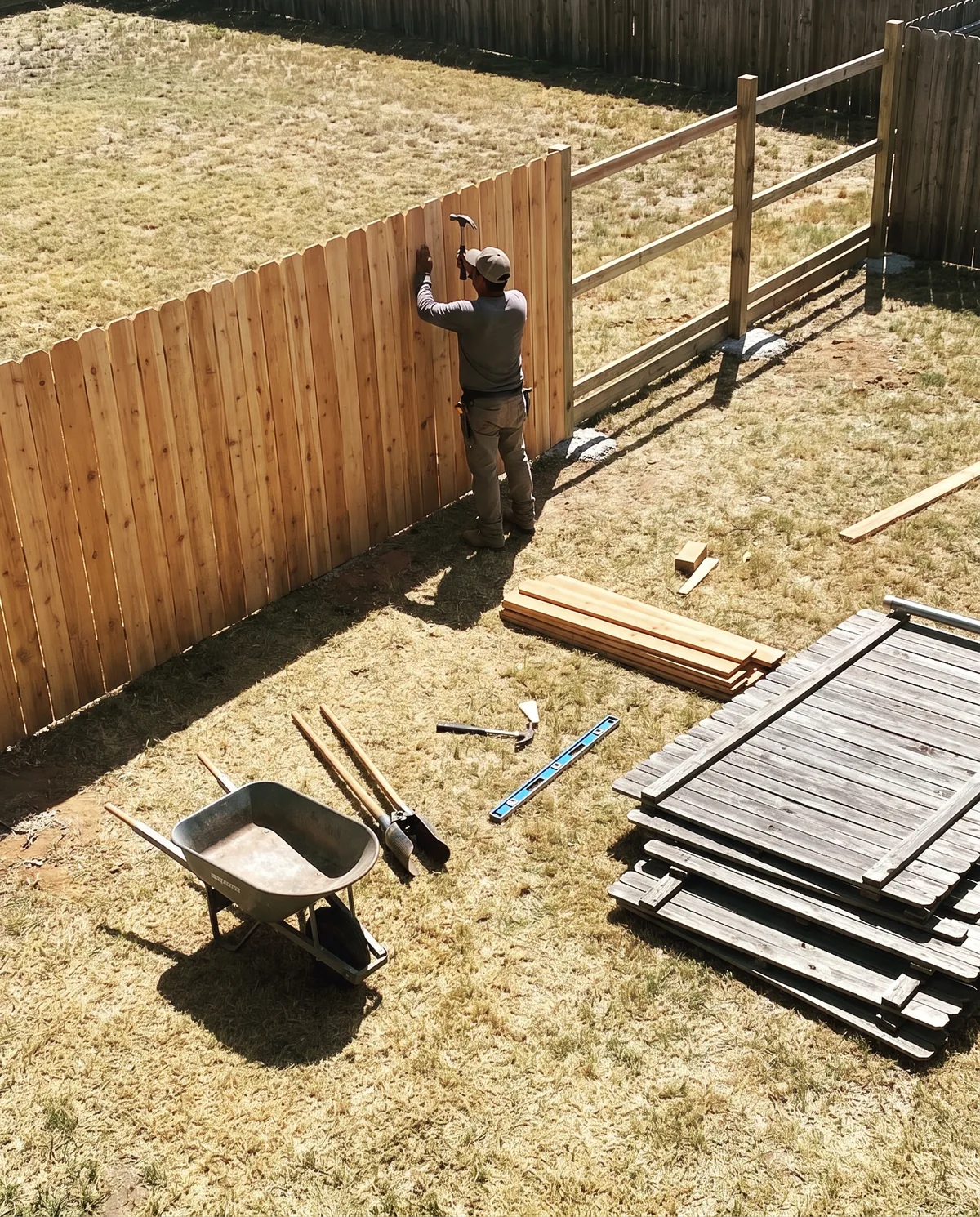
Fence installation and repair for Katy and Houston yards
Fence installation and repair in Katy & Houston comes down to a few things that local conditions test hard: posts that stay straight in wet clay, lumber that holds up to humidity, and a layout that respects property lines and HOA rules. Most backyards in the newer subdivisions around Katy, Cypress, Fulshear and Richmond are lined with six-foot wood privacy fences, and many of them are reaching the age where boards warp and posts lean.
Down South Roofing & Construction repairs, replaces and installs fences from its base in Katy. The work starts with a look at what is there now: which sections are failing, whether the posts are sound, where the gates are, and how water moves along the fence line after rain.
Wood privacy fence styles: side-by-side, board-on-board and trim
A standard side-by-side picket fence places boards edge to edge on one side of the rails. As the wood dries and shrinks, small gaps open between pickets. Board-on-board overlaps the pickets in two layers, so it stays private even as the wood moves, at the cost of more material. Either style can be built with the rails facing in or with a finished look on both sides.
Details like a top cap and trim board, a kickboard along the bottom, and steel posts hidden behind the pickets change how a fence looks and how long it lasts. A kickboard keeps pickets off the wet ground, which helps in yards where sprinklers or standing water hit the fence line.
Cedar vs. pine for a Houston fence
Cedar and pressure-treated pine are the two most common choices for wood fences in the Houston area. Cedar has natural oils that resist rot and insects, tends to stay straighter, and weathers to a soft gray if left untreated. Pressure-treated pine is chemically treated for ground contact and decay, is often the more economical option, and is commonly used for posts and rails even when pickets are cedar.
Pine can shrink, twist and check more as it dries, so it benefits from being stained or sealed once it has dried out. Many homeowners pair steel or treated posts with cedar pickets to get the best of each. The right mix depends on the look you want, how long you plan to stay, and what your HOA allows.
How long does a wood fence last in Houston humidity?
Heat, humidity, heavy rain and sprinkler spray are hard on wood. Fences in the Houston area usually fail first at the bottom of the pickets and at the posts, where wood stays wet longest. Lifespan varies widely with the lumber, how the posts were set, whether the fence was sealed, and how much water hits it.
To get more years out of a fence, keep sprinklers aimed away from it, trim back vines and shrubs so it can dry, re-stain or reseal every few years, and replace damaged pickets before rot spreads. Leaning sections, posts that rock when pushed, and gates that no longer latch are signs the structure, not just the boards, needs attention.
Post setting: where most fences fail
A fence is only as straight as its posts. In Gulf Coast clay that swells when wet and shrinks when dry, posts need enough depth and a solid footing to resist both soil movement and wind load on a solid privacy fence. Holes are typically dug deeper for taller fences and gate posts, and posts are set plumb in concrete.
Many fences in the area now use galvanized steel posts, which do not rot at the ground line, with wood rails and pickets attached. Wood posts can still work well when they are rated for ground contact and the concrete is shaped to shed water away from the wood. Ask which post type is planned and how deep they will be set.
Fence replacement after storms
Tropical storms, hurricanes and strong thunderstorms push hard on a solid wood fence, and sections with weak or rotted posts are usually the first to go down. Sometimes only a few panels and posts need replacing. When much of the fence is leaning or the posts are failing along the whole run, replacement is often more practical than chasing repairs.
After a storm, take photos of the damage before anything is moved, and contact your insurer to ask whether fences are covered under your policy. The Down South team can look at the fence, explain what they find and give you a written scope. If the same storm affected your roof, gutters or siding, the team can look at those too.
HOA fence rules, property lines and gates
Most master-planned communities in Katy, Cypress and Sugar Land have rules about fence height, material, which side faces the street, stain color and whether a fence can extend past the front of the house. Many require approval before work starts, even for a replacement that matches the old fence. Check your HOA guidelines and your property survey before choosing a layout.
Gates deserve their own plan. A walk gate needs a stout post on each side and a frame that will not sag. A double drive gate for a trailer, boat or mower needs heavier posts, a center drop rod and enough clear width for what you plan to bring through. Talk about latches, self-closing hinges and pool-area needs at the start.
What a fence estimate should include
A useful fence estimate lists the linear footage and height, the lumber for pickets, rails and posts, the post type and how deep the posts will be set, the style and any cap or kickboard, and each gate with its width and hardware. It should also say whether tearing out and hauling away the old fence is included, and how the yard will be left when the crew is done.
Before the visit, mark the corners you want, note where utilities, sprinkler lines and drainage paths cross the fence line, and gather your HOA guidelines. Down South provides a written scope and estimate before work starts, so you can compare options side by side.